


Your complimentary articles
You’ve read one of your two complimentary articles for this month. To have complete access to the thousands of philosophy articles on this site, please
You can register for a free account to have four complimentary articles per month. We will occasionally email you a newsletter, from which you can unsubscribe at any time. We do not sell personal data or otherwise disclose personal information to other organisations.
Tallis in Wonderland
On Being (Un)Remembered
Raymond Tallis contemplates the end of all things Tallis.
My eightieth birthday creeps up on me, and it becomes increasingly difficult to ignore a certain truth. As the survivor of over four thousand Wednesdays, nearly thirty thousand dinners, and roughly half a trillion intakes of breath, I am a thermodynamic freak. There is, after all, only so long that the entity typing this sentence can maintain its distance from the equilibrium state that is the overwhelmingly probable destination of all dynamic entities. The bodies of philosophers reflecting on the laws of thermodynamics are not exempt from this fate: they, too, are en route to total disorder.
Of course, some of the events, processes, actions and reactions that have occupied my days have slowed down my progress towards chaos. The dinners I have eaten, and the intakes of breath that have delivered oxygen to my cells, and the exhalations that have got rid of carbon dioxide (along with puns and other semantic emissions of uncertain value), have postponed the thermodynamic hour of reckoning. But even the infinitely ingenious organelles, cells, tissues, and organs maintaining me as a going concern have limited lifespan. Few of us live to be ninety; fewer still become centenarians; and no-one has so far been confirmed to have lived longer than Jeanne Calment, who died in 1997 aged 122 years and 164 days.
It is scarcely surprising, therefore, that from time to time my attention turns to the question of what happens after the last Wednesday. As long-term readers may have guessed from my treatment of deities in ‘Excusing God’ (Philosophy Now 168), I am an infidel. I also believe that while the organism that metabolises Raymond Tallis’s dinners and the person that cracks his jokes are fundamentally different, they are nonetheless inseparable. The I and the It – or certain states of the It – are therefore co-terminous: just as they started together, so they will end together. Only so long as my flesh lives and breathes do I live and think. So, what happens to Raymond Tallis (1946-20**) after 20**?
He expects he will be remembered for a bit by those who knew him and who, for a while, outlive him. Unsurprisingly, though, the prospect of demotion from ‘I’ to ‘He’ is not a great source of comfort. A third-person life in the minds of others cannot compare with the first-person life he lived in his own mind. Indeed, when we reflect on the life in our minds that’s enjoyed by friends, acquaintances, and colleagues who have passed on before us, ‘enjoyed’ seems hardly the right word. The random triggers of random memories scarcely amount to a resurrection, even when they are accurate: “Do you remember Tallis? Wasn’t he the chap who bored us witless with that talk on prevention of cerebrovascular disease that had too many slides and endless unfunny jokes?” Or we might simply be confused with other acquaintances when an association of ideas triggers memories that are actually false. To put the record straight: I wasn’t the person who drank rather a lot of Pinot Grigio in the pub you remember as The Jug & Bottle: it was actually The Bull & Stirrup.
Of course, there will be others to whom we mattered more when our lives intersected on the surface of the Earth. I am talking about one’s nearest and dearest. They will remember us more often, less randomly, and with more emotion. With time, however, even in the minds of those whom we loved and who loved us, our posthumous existence will become ever more episodic. Our silence will be drowned in the clamour of daily life. And we shall, of course, be in competition for attention with others who have also been lost.
After the crematorium has finished the work started by the Second Law of Thermodynamics, those who shared our lives, who shed a solitary tear or an imaginary smile at a memory, lack the power to palliate our extinction, not the least because they too will inevitably be extinguished. It will not be long before the last person who knew us will themselves have lost the ability to know anything.
Securing Immortality?
There is of course the dream of extending one’s posthumous existence in the fickle memory of the world that has shaken one off, by being remembered for something: the fantasy of living on as a disembodied name, through the enduring impact of scientific, artistic, cultural, or political achievements. Robert Boyle and Wolfgang Pauli are preserved, after their last rites, through Boyle’s law and the Pauli exclusion principle. Michelangelo and van Gogh live on in the attention of those who encounter, and are affected by, their art. Biographies, statues, buildings, and places reinforce the posthumous presence of Great Women and Great Men in the collective consciousness of the living.
Which gives me a chance to welcome one of my heroes: the Czech anatomist and physiologist Jan Evangelista Purkinje (1787-1869). His name is sprinkled over many locations in my body between my bald head and my toenails. He is in my heart (Purkinje fibres), my brain (cerebellar Purkinje cells), in Purkinje bone corpuscles, in Purkinje spaces (in my tooth enamel) – and elsewhere. In short, his fingerprints are all over me (and you); and guess what, he was the first person to classify fingerprints. It’s hardly surprising that his memory is cast in bronze in Charles Square in Prague, where he is seated on a chair, not far from a street named after him. And yet… and yet, Purkinje’s intermittent presence in the consciousness of those who walk past his monument or read about him in textbooks cannot compensate for the loss of the self-consciousness of the brave man who distracted himself from the premature death of his wife and two of his children by subjecting the human body to a gaze of unparalleled intelligence.
Notwithstanding the monuments, buildings, adjectives (e.g. ‘Shakespearean’), and biographies that house their afterlife, the famous are as much in competition for the attention of the living as the obscure. Not that this would have worried Purkinje, whose many virtues included modesty. As he reflected a few years before he died:
“I have indeed discovered various things but, as for the immortality of my name, this should not be taken literally. A hundred years hence perhaps only a few will know who Purkinje was. But that makes no difference. For, indeed, we do not know who discovered the plough, and it serves all humanity. The cause remains the same, but not the name, and that is the important thing.”
(‘Reminiscing about Jan Evangelista Purkinje’ Advances in Physiology Education, Icilio Cavera et al)
Few people face the prospect of absolute extinction with such philosophical calm. For many, perhaps most, great minds, there remains the dream of a legacy. Writers are particularly prone to this fantasy. The great nineteenth century French novelist Stendhal, under-appreciated in his lifetime, drew comfort from the hope that “his lottery ticket would come up in the twenty-third century”.
The romanticisation of authorship, in which thoughts, cryogenically preserved, confer an afterlife upon a thinker, was beautifully captured in Marcel Proust’s account of the death of the fictional novelist Bergotte:
“They buried him, but all through that night of mourning, in the lighted shop-windows, his books, arranged three by three, kept vigil like angels with outspread wings and seemed, for him who was no more, the symbol of his resurrection.”
(Remembrance of Things Past, Vol.II, The Captive, trans. C. Scott Moncrieff & Terence Kilmartin, p.180, 1932)
Alas, that ‘resurrection’ depends upon the reader opening – and reading – his books rather than those of another writer, or responding to other equally (or more) worthy demands on her time. Helplessly, the volumes await a stranger’s attention that is as capricious as one’s own to re-ignite his thoughts, liberate them from the silence of the printed word. And the reader’s reading has to maintain itself in the chaos of everyday life: the doorbell rings, the book is laid aside, and its echoes are extinguished by noisier events demanding redirected attention.
The possibility of any resurrection in the distracted minds of the living seems insufficient consolation, even for those who achieve such ‘immortality’, for the thought that one is being frogmarched by time to the time when one has no longer heard of oneself. No legacy, it seems, can compensate for the loss of the continuous self-awareness that comes with being alive and occupying the existential centre of the universe in which one passes one’s life. Without that self-awareness, immortality is not something that can be enjoyed.
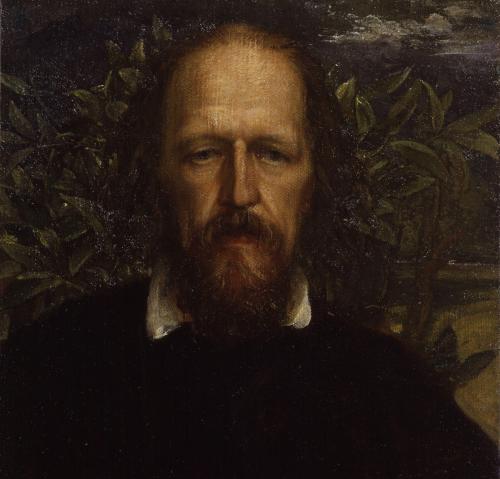
Alfred Tennyson, apparently remembering that he must die, by George Frederic Watts, 1864
After Afterlife
What about the alternative – an afterlife not dependent on the capricious memories of others – either with or without a body?
Leaving aside the possibility of eternal damnation or salvation suffered by a disembodied soul, endless life without a body seems likely to be rather short of content. I cannot imagine Raymond Tallis continuing without a ground floor of meaning connected with bodily needs and the experiences and activities associated with them. In the absence of a body to secure occupancy of a particular neck of space and time, there would seem to be little to connect him with its stories. Too little, at least, to make a life worth living, even less to connect him with stories shared with others.
Another alternative, bodily resurrection, is no less problematic. Leaving aside the small detail of reconstituting my arms, legs, smiling or scowling face, and the rest, out of a vase of ashes, there are many brow-furrowing questions. At what age shall I be reconstituted? And what company shall I find myself in when I first arrive on ‘the other side’? Nursery-mates? Fellow medical students? With my wife and family? In a conclave of retirees? And how will their ages be adjusted so that their posthumous existences co-ordinate with mine, and we can continue to be together so that our memories will converge in recognition of each other? If I begin my afterlife at the beginning of my bodily life, given the accidents that determined how it panned out, what will ensure that I am reunited with my wife and have the children and grandchildren I could not bear to live without? And how shall we manage to live indefinitely without ageing? Who would wish to be like Tithonus in the eponymous poem by Tennyson? Granted eternal life by Zeus, he forgot to ask for eternal youth, was “by cruel immortality consumed”, and ended up unable to speak or move, shrunken to a grasshopper.
It is difficult, therefore, to imagine an afterlife in which one continues in the first-person; and an afterlife outsourced to the memories of others is likely to be reduced to random, not necessarily accurate, recollections. Better then to settle for what we are likely to have and, as Shakespeare (who is closer to artistic immortality than anyone) expressed it, “To love that well that thou must leave ere long” (Sonnet 73). The years since his last breath have been pretty empty for him.
© Prof. Raymond Tallis 2026
The Palgrave Companion to the Philosophy of Raymond Tallis edited by Robert Doede (Palgrave: Macmillan) is out now.
Advertisement
