


Your complimentary articles
You’ve read all of your two complimentary articles for this month. To have complete access to the thousands of philosophy articles on this site, please
If you are a subscriber please sign in to your account.
To buy or renew a subscription please visit Subscriptions.
If you are a print subscriber you can contact us to create an online account.
You can register for a free account to have four complimentary articles per month. We will occasionally email you a newsletter, from which you can unsubscribe at any time. We do not sell personal data or otherwise disclose personal information to other organisations.
Philosophical Haiku
Lucretius (c.95-c.55 BCE)
by Terence Green
Fear not time’s passage,
Such is the nature of things.
Live until you cease.
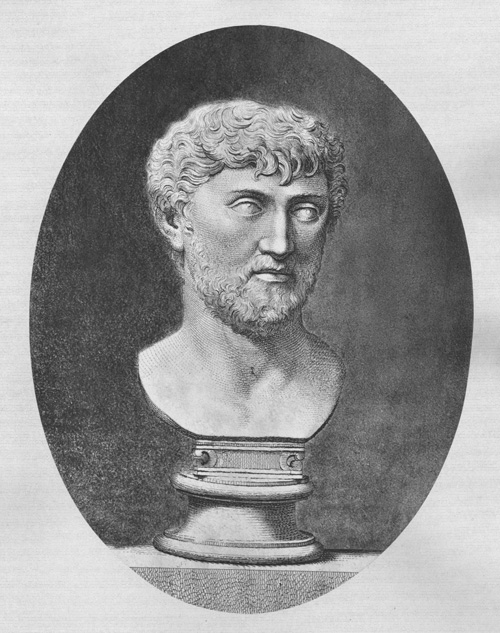
Titus Lucretius Carus was a Roman poet. And I’m afraid, biographically, that’s about all we know. He did, however, write a tremendous poem, De Rerum Natura (On the Nature of Things), in which he set out, in stylish Latin hexameters, the philosophy of Epicurus. Fundamental to Lucretius’s exposition is the Epicurean claim that we are just material beings, without any spiritual or soul-like element. And so, when we die, that’s it, there’s nothing. With this cheery news in hand, the poem’s key message is that we all have within ourselves the possibility of attaining happiness. Hurrah! We just have to stop worrying about dying, of course.
To help liberate us from this pointless anxiety, Lucretius poses a few thought-provoking questions: Why waste valuable time and energy obsessing about dying, since once we’re dead, we’ll know nothing about it? Do we lament the eternity that passed before we were born? That would be ridiculous. So why lament the eternity that will pass after we’re gone? From the standpoint of the universe, we exist for not even a blink of an eye, so how can life be that important to us?
Lucretius hoped that pondering such Epicurean questions as these would give his contemporaries contentment and calm. We can imagine, however, that some might have instead collapsed in fits of nervous despair: not everyone is captivated by the idea of the eternal – especially eternal death. It just seems like such a very long time to be doing nothing.
© Terence Green 2026
Terence Green is a writer, historian, and lecturer who lives in Eastbourne, New Zealand.
Advertisement
