


Your complimentary articles
You’ve read one of your two complimentary articles for this month. To have complete access to the thousands of philosophy articles on this site, please
You can register for a free account to have four complimentary articles per month. We will occasionally email you a newsletter, from which you can unsubscribe at any time. We do not sell personal data or otherwise disclose personal information to other organisations.
Ethics in Society
Professional Baseball & Performance-Enhancing Drugs
Darrin Belousek considers different ethical perspectives on drugs in sport.
As a life-long fan and a former school player of baseball, my view on performance-enhancing drugs is not neutral: I think they are a scourge on the sport. As a philosopher who teaches ethics to university students preparing for professional careers, I also think performance-enhancing drugs are a serious ethical problem in the arena of professional sport. While most baseball fans agree that the use of performance-enhancing drugs should be banned from the sport, and many even think that players caught using them should be banned too, the philosophical question is, why should that be so? This question may be analyzed from the perspectives of various ethical theories – for example, Kantianism, libertarianism, and utilitarianism. However, I will argue that none of these theories can tell us why performance-enhancing drug use should be banned, and that getting to the heart of the matter requires recourse to the ancient theory of virtue ethics.
Kantian Objections
The most common objection to the use of performance-enhancing drugs in professional sport is that this is, basically, cheating – which implies a theft of opportunity from other players of the sport. When one player gains benefits – monetary compensation, fan appreciation, seasonal honors, statistical records, etc – by using performance-enhancing drugs, he does so by shouldering a lesser burden than players who do not use drugs. Starting with the same talent, non-drug-using players have to work harder and longer than drug-using players to achieve the same gains. Thus, drug-using players give themselves an unfair advantage. Because there are limited opportunities to gain the benefits available from a sport, they are effectively garnering added benefits for themselves at the expense of the other players’ opportunities to gain those same benefits. Therefore, to use performance-enhancing drugs is not simply to break the rules, but to steal from those players who do follow the rules.
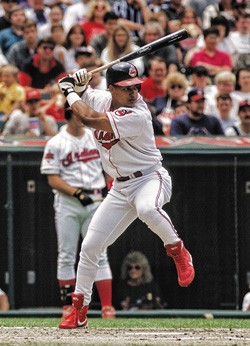
On May 7th, 2009, Manny Ramirez was suspended 50 games for testing positive for performance enhancing drugs during his time with the Los Angeles Dodgers.
The objection that performance-enhancing drug use creates an unfair playing field can be readily understood from the perspective of Immanuel Kant’s moral theory. The foundational principle of Kantian ethics is the Categorical Imperative: “Act only on that maxim that you can at the same time will that it should become a universal law” (Groundwork of the Metaphysics of Morals, 1785). In effect, the Categorical Imperative judges as morally wrong any attempt to make oneself an exception to the rule guiding one’s actions (or, equivalently, to make a separate rule for oneself). Kant’s argument is that only rules (maxims) that can be consistently ‘universalized’ respect each moral agent as ‘an end in him(or her)self’. To make oneself an exception to the rule is to make others merely a means to one’s ends, which to Kant is fundamentally morally wrong.
What is the performance-enhancing drug-using player’s maxim? He would seem to be operating with a maxim such as this: If I can gain advantages over other players by using performance-enhancing drugs, then I will use performance-enhancing drugs. Kantian theory would now have the player ask: How would things be if I were to will my maxim to be a universal law? – meaning, What if the rule I’ve made for myself were to become the rule for all players? If my maxim were made the rule for all players, then all players who could gain advantages by using performance-enhancing drugs would use performance-enhancing drugs. In that case, however, the advantage I’ve gained for myself by using drugs would be negated; for the advantage to me of using the drugs is premised on others not using those drugs – that is, my advantage is premised on my drug use being an exception to the rule. So my maxim, when universalized, defeats the purpose for which I willed it, rendering the will behind my maxim self-contradictory, and so to Kant intrinsically immoral. In order for my maxim to achieve the purpose for which I willed it, there would have to be two rules, one for myself (permitting my performance-enhancing drug use) and another for all other players (prohibiting their performance-enhancing drug use). But the other players, if informed, would never rationally consent to this dual rule that works to their own disadvantage. And to impose a dual rule that advantaged me at the expense of all other players without their informed consent would in effect be to use the uninformed players as a mere means to my ends, a cardinal sin for Kantians. The only scenario that conforms to Kant’s Categorical Imperative is one rule for all players.
However, this ‘fairness’ objection applies only once we have established a rule prohibiting performance-enhancing drug use. On Kantian ethics, for all we have said so far, we could equally have a universal rule allowing the use of performance-enhancing drugs for all. A maxim permitting one player to use performance-enhancing drugs could be universalized to all players. While there is a contradiction in a rule permitting one player to use performance-enhancing drug if other players are prohibited from such use, there would no contradiction in a maxim permitting all players to use performance-enhancing drugs. To put it another way, as long as all players in the game follow the same rule, then whether that rule permits performance-enhancing drug use or prohibits it, it is fair either way.
This begs the question: Why ban performance-enhancing drug use from the sport in the first place? – prompting the further question of whether there is a Kantian objection to performance-enhancing drug use per se.
Here a Kantian might ask whether permitting performance-enhancing drug use would provide others the opportunity to manipulate a player’s autonomy, or whether by a player’s own drug use he would subvert himself as an autonomous agent.
So, first: might a rule permitting the use of performance-enhancing drugs undermine a player’s autonomy by allowing others to manipulate him as a means to their ends?
Were performance-enhancing drug use permitted, players who would otherwise choose not to use performance-enhancing drugs could be coerced by win-conscious managers or revenue-hungry owners to use the drugs, or else get benched or traded. To safeguard players’ autonomy, therefore, any rule permitting performance-enhancing drug use would have to stipulate that each player’s contract must have a clause either allowing the player to freely opt out of team-mandated performance-enhancing drug use, or granting a dissenting player free-agent status should a team mandate performance-enhancing drug use.
Second: Would performance-enhancing drug use, even freely undertaken, subvert the player as an autonomous agent? In other words, would a player, by using performance-enhancing drugs, be using himself as a mere means to an end?
Unless performance-enhancing drug use would have the effect of compromising a player’s autonomy by undermining his ability to rationally choose in his own best interests, it does not seem that there is a Categorical Imperative-based objection. Now, there is empirical evidence that some abusers of anabolic steroids become addicted, continuing their drug use despite negative effects on their physical health and social relations, and exhibiting symptoms of physical withdrawal and emotional disturbance when drug use is discontinued, including prolonged depression, even attempted suicide in some cases. Even so, this evidence would constitute a reason not for a blanket ban on performance-enhancing drug use, but for requiring players to moderate their drug use, and for team physicians to monitor drug-using players in order to prevent addiction, and so preserve their autonomy. So Kantian ethics cannot give us a reason to ban performance-enhancing drugs outright.
The Liberty View
Unqualified libertarian ethics would unequivocally favor permitting performance-enhancing drug use, without any regulations or restrictions.
According to libertarian ethics, such as that espoused by John Stuart Mill in On Liberty (1859), the individual is by nature sole owner of his own body; and each person’s natural right of self-ownership entails the liberty of each person to do with their own body as they want, even to their own harm, as long as this stops short of harming others. Respecting the individual’s right of self-ownership requires allowing the maximum liberty for each person compatible with an equal liberty for others. So from the libertarian perspective, banning performance-enhancing drug use, or even requiring drug use to be moderated or monitored, would infringe individual liberty and thus violate self-ownership. Respecting each player’s natural right of self-ownership, therefore, requires that each player be free to choose for himself whether to use performance-enhancing drugs or not. As long as no player is forced or coerced to use (or not use) performance-enhancing drugs, and as long as no fraud is committed in using performance-enhancing drug (say, by dishonesty in contract negotiations), then no one’s liberty would be infringed and everyone’s natural right of self-ownership would be respected.
Whether or not performance-enhancing drug use by players would increase the profits of owners, enhance the enjoyment of fans, promote the good of the game, or even benefit the players themselves, are matters of moral indifference to libertarian theory. Players should be free to pursue those ends, or free to ignore those ends, for it is freedom of choice that promotes what ultimately matters on this theory – self-ownership.
The Utility Argument
Utilitarian theory decides right from wrong based not on the freedom of the agent, but on the net pleasure and pain gained as a result of each action. The general principle of utilitarian theory, as expounded for example by Jeremy Bentham (1748-1832), is the greatest happiness (or benefit) principle: Actions are right in proportion as they tend to promote the greatest happiness for the greatest number, where happiness is the presence of pleasure and the absence of pain. This utility principle says we can evaluate the morality of an action by summing up the effects of the action for good or bad, taking into account all those affected by the action. The net result of this sum is the utility of the action, which will be positive if the action generates a balance of pleasure over pain, or negative if the action generates a balance of pain over pleasure. The aim of morality is to maximize utility or happiness – pleasure and the absence of pain – by choosing from among the available options whatever course of action has the greatest utility.
The utility principle can also be used to evaluate rules. Applied to the present question, utilitarianism would have us calculate the utility of a rule permitting performance-enhancing drug use, and compare that to the utility of a rule prohibiting performance-enhancing drug use. This calculation of comparative utility would need to consider various factors from the perspectives of every group affected. After summing up all the benefits and subtracting all the costs, the right rule is the one having the greatest utility in the long run. So players using performance-enhancing drugs could benefit in the short-term from statistics-inflating performances and financially-inflated contracts, but in the long run users could experience negative effects on for example their physical or emotional health. Their use of performance-enhancing drugs could increase excitement for fans through homerun races and the like, but it could in the long term also deflate interest as fans come to expect all players to turn in stellar performances. Performance-enhancing drug use could increase revenues from ticket sales for owners, since stellar performances excite fans; but it could also become difficult to sell high-priced tickets to disillusioned fans.
So far, we have reached the following conclusions: Kantianism would either prohibit the use of performance-enhancing drugs in sport, or permit their use with regulations and restrictions. Libertarianism would permit unregulated, unrestricted performance-enhancing drug use under conditions of free competition. And utilitarianism might permit or prohibit performance-enhancing drug use, depending on which rule would generate greater utility in the long run, which is unclear. These ethics theories, then, leave us unable to make a sure and substantive argument against performance-enhancing drug use in baseball and other sports. To make sense of why performance-enhancing drug use should be banned from the game, therefore, I suggest that we look to virtue ethics.
A Virtue Perspective
Deeper than reasons of fairness, liberty, or utility, are reasons of virtue. Virtue ethics shifts our attention from the question of which actions or rules are right (What should we do?) to the question of which qualities of character are best (What kind of people should we be?). From a virtue ethics perspective, as promoted by Aristotle (384-322 BC) for instance, good character guides right action: the ethical aim is to form oneself as a good person, and a well-formed person both knows how to act rightly and will habitually choose to do so. This theory says that it is the deliberate practice of various activities that forms the habits of character, for better or for worse. Accordingly, it is crucial to choose and nurture appropriate practices within every domain of human activity, in order to cultivate a virtuous character.
When considering which practices we should adopt within a particular domain of human activity, virtue ethics would have us ask two questions: First, would adopting a certain practice foster habits that are formative of good character, and thus improve us as human beings, or would it tend to form bad character, and so worsen us? Second, would adopting a certain practice cultivate the standards of excellence specific to that activity, thereby promoting the good intrinsic to that activity, or would it corrupt those standards, and thus damage the good of the activity? Using these questions as leverage points, let me offer three interlocking arguments against permitting performance-enhancing drug use in professional baseball, or indeed, in any sport.

Starting pitcher Roger Clemens, accused of using anabolic steroids, denied it under oath before Congress. He was prosecuted for perjury but found not guilty. Photo © Keith Allison
First, players who take performance-enhancing drugs deceive others. Whether from the vantage point of the stadium seats or the dugout bench, a drug-assisted performance is virtually indistinguishable from an authentic, non-drug-augmented one. Lacking insider knowledge of whether this or that player has been working out in the clubhouse or getting injections at a drug clinic, fans and players are unable to tell the real players from the fakes. It all looks the same. This indistinguishability is not incidental: succeeding at the game in the eyes of both fans and other players by means of performance-enhancing drugs depends on the illusion of authenticity. The deception is deliberate. To permit performance-enhancing drug use in the game would thus foster the perverse habit of deception among drug-using players. Doping promotes duping.
Second, and following on from this argument, drug use by some players casts suspicion on all players. Unless there are both regular and rigorous drug testing and serious penalties to weed out all the users, fans and players have no way of knowing which players are pumping iron and which are popping pills. So when a player is caught using them it undermines trust in all players. Thus, when a batter hits a homerun ball that sails clear out of the ballpark, everyone watching is left to wonder whether the batter has been taking hits himself. As a result, fans and players begin to suspect all pre-eminent players of having ill-gotten gains, which is a disservice to those players who succeed by authentic means. Instead of being deservedly honored, players who succeed by their virtue then suffer the same bad reputation as players who succeed by vice. To permit performance-enhancing drug use in the game would thus foster among both players and fans the perverse habit of dishonoring the deserving.
Third, performance-enhancing drug use not only corrupts the character of both players and fans, it also corrupts the standards of excellence of the game, in two inter-related ways. When performance-enhancing drug use is permitted, we reward performances unworthy of honor, and compromise our ability to compare performances of today with performances from the past. This strikes at the heart of baseball as a tradition – the handing down of athletic practices that require the excellence of practitioners as the proper means of success in the game, and whose excellent performance promotes the intrinsic good of the game.
Excellence In Sport
Baseball, I was taught by my school coaches, is a microcosm of life. That is true in many ways, but especially one in particular. There are many activities and goals one can pursue in life, but every one of them is formative of character, for better or worse. It is therefore imperative to choose activities wisely, and perform every chosen activity well. Choosing the wrong activities, or poorly performing the right activities, will tend to produce malformed character. The “function” befitting “a good human” Aristotle thus maintained in his Nicomachean Ethics, is the “noble performance” of the right activities “with the appropriate excellence.” Likewise, while sports differ from each other in various respects, each sport has a telos or end-goal intrinsic to the sport, and toward which all activity in that sport, when played properly, aims – excellence in performance. We might thus paraphrase Aristotle and say: “the function befitting a good player is the noble performance of their sport with the appropriate excellence.”
What about victory? Don’t the players of any sport aim to win? Surely, players of any sport do desire victory. But, of course, not all players can win every contest. And yet, all players in every contest can achieve excellence in the sport, even without victory: each player can play the sport well whether she wins or not. Winning, after all, depends partly on chance factors external to one’s performance and beyond one’s control (wind gusts, odd hops, umpire calls, etc). Excellence, by contrast, belongs to a player’s performance itself: the excellence of a performance is an intrinsic good to which victory cannot add and from which defeat cannot subtract. While players may seek the glory of victory, therefore, the end-goal of the sport itself is not victory over opponents but excellence in performance. Moreover, were players to take the pleasure of victory and the pain of defeat as the criterion of action, it might tempt one to compromise the intrinsic good of the sport (excellence) in order to achieve the extrinsic goal (victory).
Authentic excellence in athletic performance is thus made evident not by the achievement of victory but by the display of virtue. The virtues of a good player are those strengths of physical and mental character honed through disciplined practice which enable a player to achieve excellence in the sport. And it is the authentic achievement of that goal of excellence in performance that is the proper criterion for judging which players are worthy recipients of the honors of the sport. Honor properly rewards virtue-in-victory, excellence-in-success, not victory or success without virtue or excellence.
What, then, is the criterion of excellence? How do we know virtue when we see it? Baseball, like any sport, is not geometry. Plato believed that there is an Ideal Circle and an Ideal Triangle, each existing abstractly in a timeless reality, by which standards we can know the degree of excellence (let’s call it) of the circle-ness or triangle-ness of concrete geometrical figures. But even if Plato is correct about geometry, for baseball there is no timeless ideal of the perfect performance against which to measure excellence in player achievement. There are only the magnificent plays and remarkable seasons of years past by which to measure the performances of today’s players and inspire those of tomorrow.
In my mind, the single season homerun record (for a 162-game season) belongs to Roger Maris, whose 1961 performance set a mark that has not been surpassed through what I understand to be the proper playing of the game. Each of the recent players who bested Maris’s 61 single season homeruns – Sammy Sosa (66 in 1998), Mark McGwire (70 in 1998), and Barry Bonds (73 in 2001) – have been implicated in performance-enhancing drug-taking: Sosa by The New York Times on June 16th, 2009, and by not yet being elected into the Baseball Hall of Fame; McGwire by admitting he had taken steroids; and Bonds through charges related to giving an evasive answer to a jury. The same potential for reevaluation applies to Hank Aaron’s authentic career record of 755 homeruns, now statistically surpassed by Bonds’ score of 762. The later performances would be compromised in authenticity if they were achieved not only by strength of virtue acquired through disciplined practice but also by bulk of muscle acquired through pills and needles. The point here is not only that these players may have stolen opportunities for setting records from other players (the fairness objection); but also, and even more pertinently, that their possibly inauthentic performances may simply be unworthy of the honors of the sport, in that they may have achieved victory without virtue, success without excellence.
By not distinguishing between authentic performances and performance-enhancing drug-assisted performances, we not only reward performances unworthy of the honors of the sport, we also compromise our ability to define excellence in the sport by comparing performances with Maris’s and Aaron’s historic marks, or any other mark. Recognizing recent performance-enhancing drug-assisted performances as the standards for any sport effectively substitutes the extrinsic goal of success for the intrinsic good of excellence as the aim of the sport – and thus substitutes designer pharmaceuticals for disciplined practice as the honored means of success in that sport. That in turn justifies pursuit of success by still other means that undermine the pursuit of excellence. Ironically, by recognizing performance-enhancing drug-assisted homerun totals as the official records, we tacitly acknowledge that such performances are just another stop along the endless road of success by any means available.
To permit performance-enhancing drug use and recognize performance-enhancing drug-assisted records, then, would reward victory without virtue, dissociate success from excellence, and thereby frustrate the end-goal befitting the nature of the sport: excellence in performance. It would thus foster corruption of the sport itself – it would end the sport by destroying the sport’s end. Where other ethical theories fail to clearly explain why we should ban performance-enhancing drugs from sport, virtue ethics therefore provides the perspective needed to see performance-enhancing drug use for what it truly is in relation to both participants in the sport and for the sport itself – a form of corruption.
© Darrin Snyder Belousek 2014
Darrin Snyder Belousek teaches philosophy and religion at Ohio Northern University and Bluffton University. His scholarly writing on the ethical dimension of the financial crisis was honored with the Templeton Enterprise Award in Humane Economics in 2010.
Advertisement
